Theory and Lineage
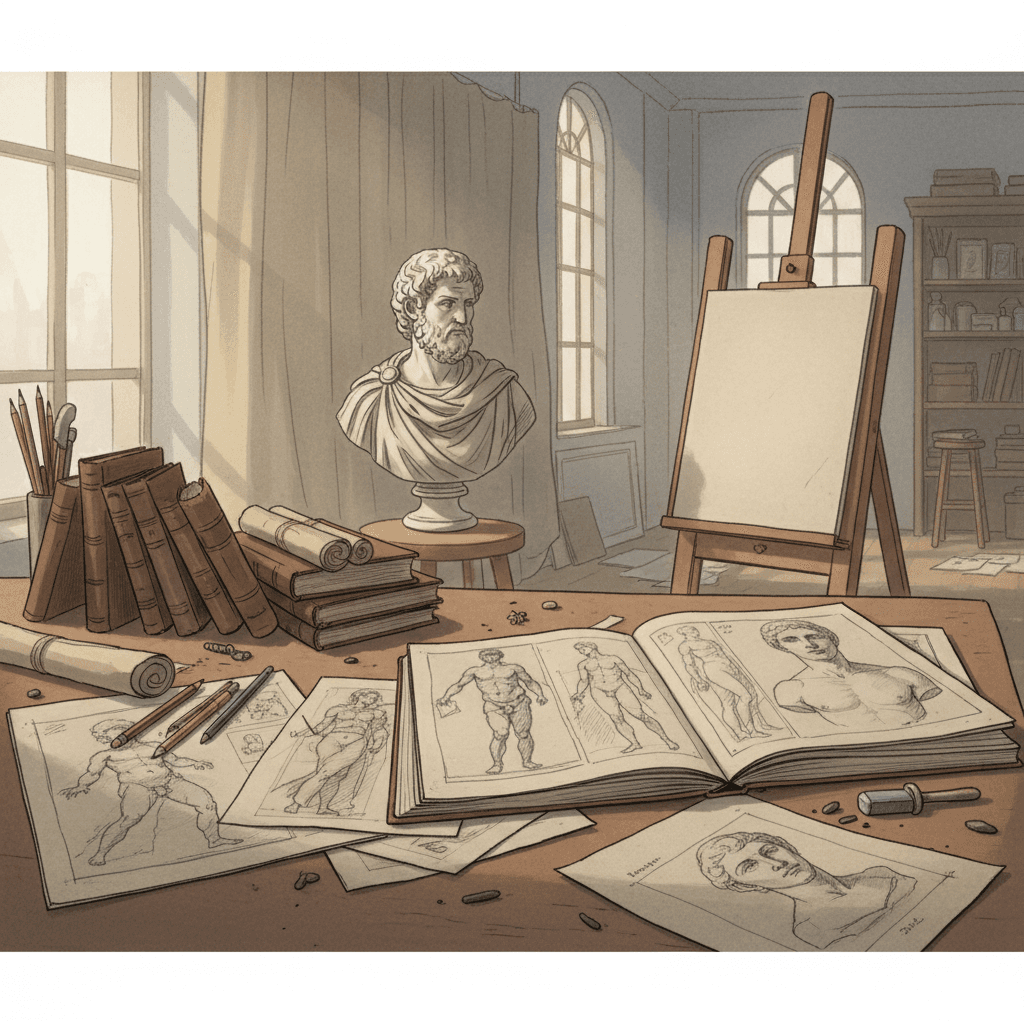
EyeCanDraw teaches you to draw on paper, with real media — the way drawing has always been learned. Every lesson follows a three-phase method drawn from three proven traditions, each addressing a different dimension of the skill.
Phase 1: Perception (Betty Edwards) — learn to see edges, spaces, proportions, and values. Phase 2: Construction (Albrecht Dürer) — build an accurate scaffold with grids, measurements, and landmarks. Phase 3: Refinement (Charles Bargue) — develop the drawing in systematic stages from block-in to finished rendering.
The app generates personalised teaching sheets for any image you upload. You print them and draw.
Phase 1: Perception — Betty Edwards
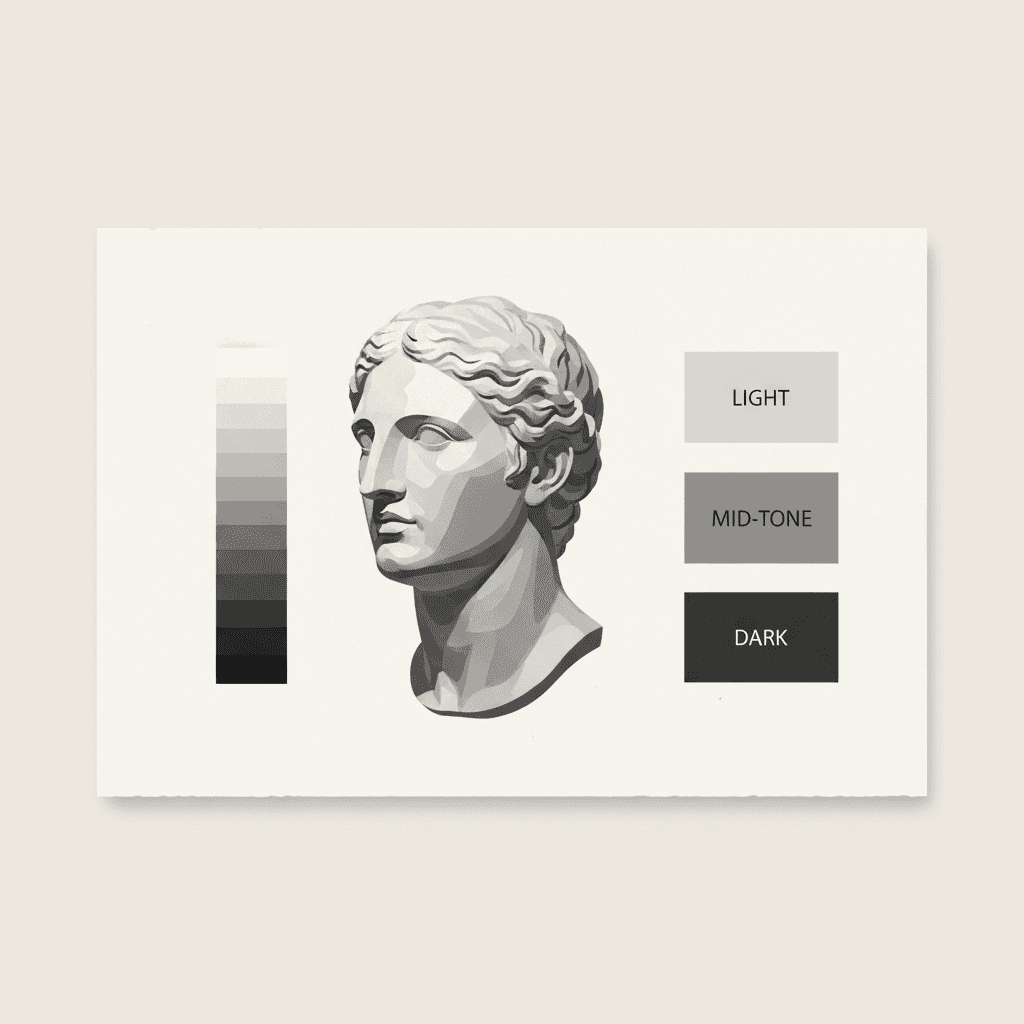
Edwards’ research showed that drawing skill is fundamentally perceptual, not motor. Beginners draw their mental symbols instead of what they see. Her five skills — edges, spaces, relationships, values, and the gestalt — train the eye to observe accurately. EyeCanDraw generates printable exercises (upside-down drawing, negative space maps, value studies) that isolate each skill for any image you upload.
Phase 2: Construction — Albrecht Dürer
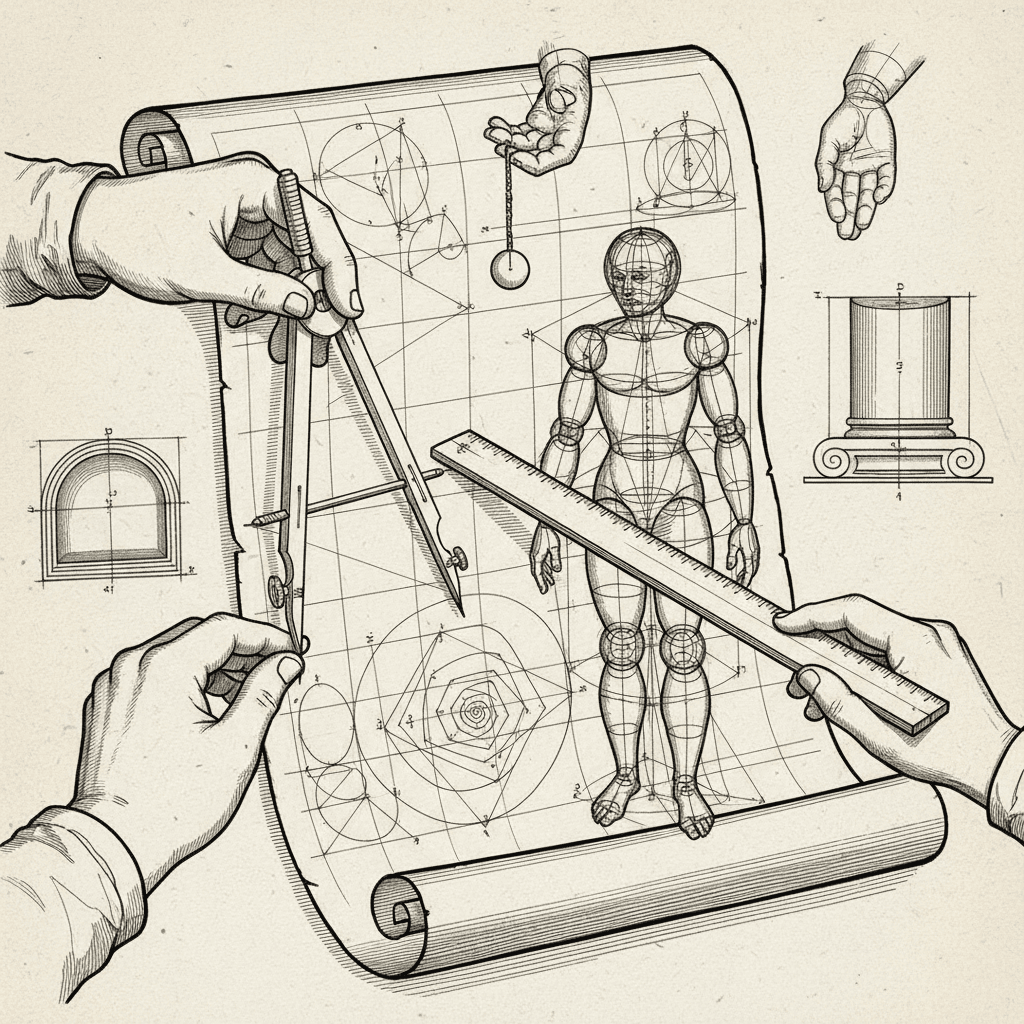
Dürer approached drawing as a measurable, reproducible process. His draughtsman’s net (grid method), geometric proportion systems, and perspective devices let artists build an accurate scaffold before committing to detail. EyeCanDraw generates gridded references, blank drawing grids, construction overlays with landmarks, alignment lines, and angle annotations — all from your photo.
Phase 3: Refinement — Charles Bargue
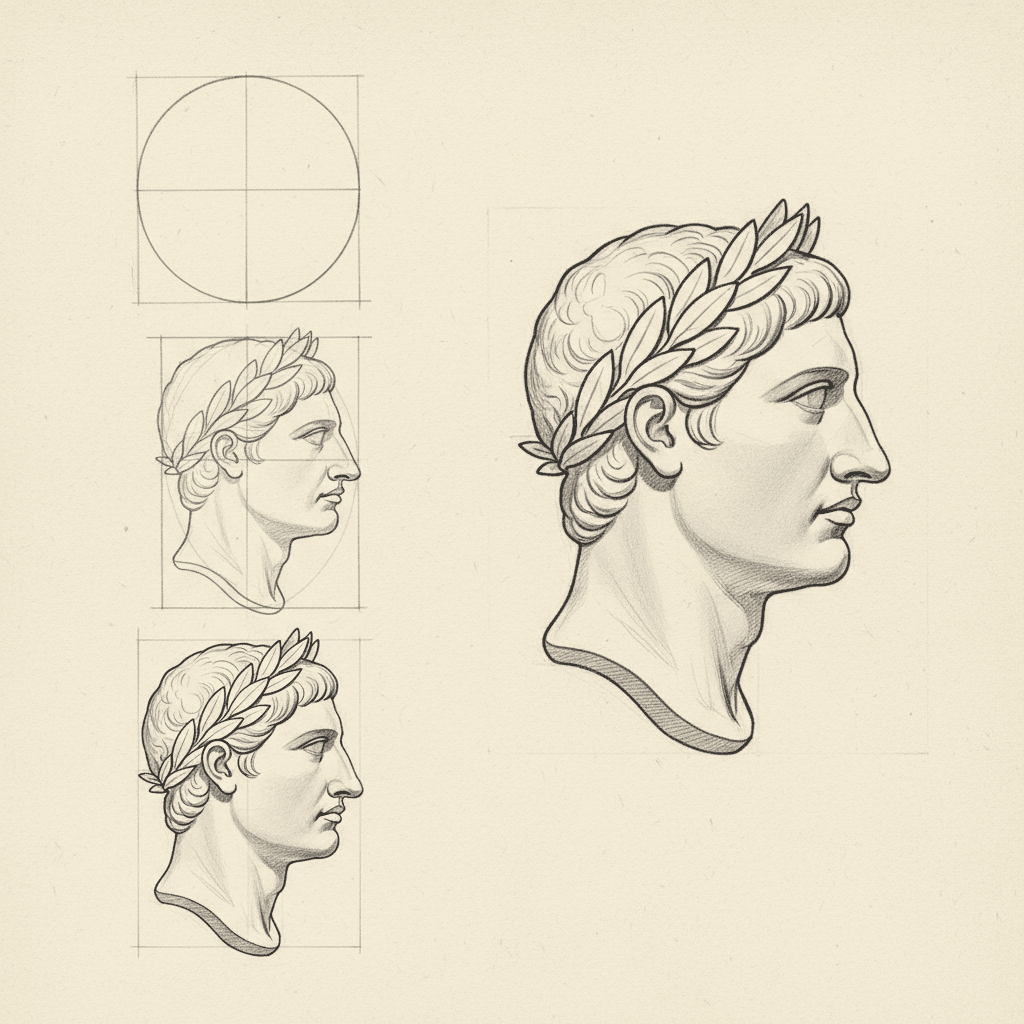
Bargue’s Cours de Dessin (1866) remains the foundation of atelier training worldwide. Each plate is drawn in three stages: a straight-line block-in capturing the envelope, a refined contour with accurate curves, then a finished rendering with full values. EyeCanDraw generates these three stages from any uploaded image — effectively creating an infinite library of personalised Bargue-style lessons.
The Paper Is The Product
Drawing is a physical, embodied skill. The hand-eye-paper loop builds motor memory and perceptual sensitivity in ways a screen cannot replicate. EyeCanDraw prepares the teaching materials — the drawing itself happens with your pencil, on your paper. Upload your image, print the lesson, pick up a pencil.
What This Means In Practice
Upload any image you want to draw. The app analyses it and generates a complete set of printable teaching sheets — perception exercises to train your eye, construction guides to build accurate proportions, and staged contour-to-value sheets to develop the drawing systematically. Traditional Bargue training is limited to 197 fixed plates. EyeCanDraw generates this scaffolding for whatever you want to draw.